

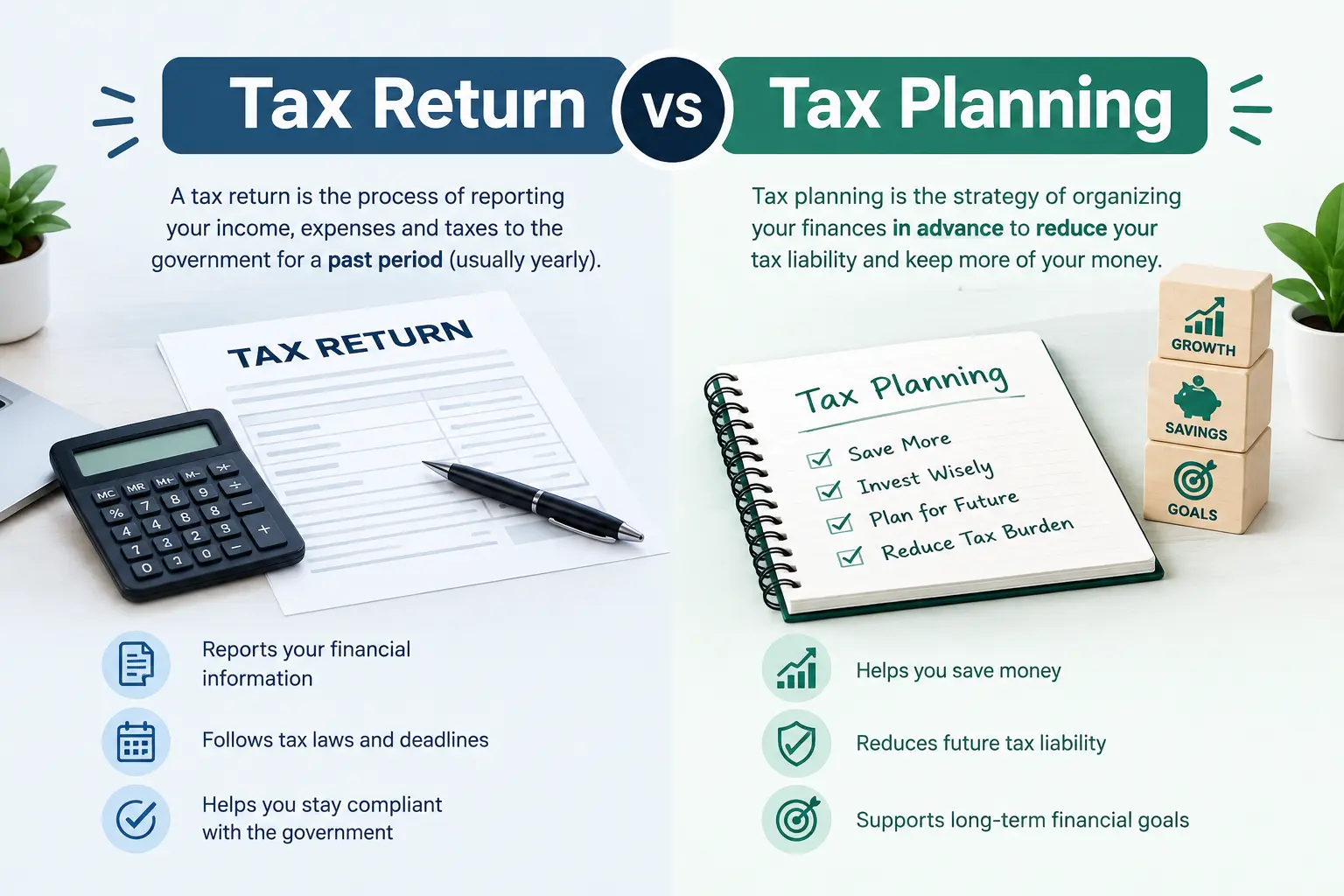
Most business owners assume that once their accountant has filed their tax return, the job is done. But filing a return and having a proper tax planning services strategy in place are two completely different things — and confusing the two could be costing you thousands of pounds every year without you even realising it.
If you have ever wondered why your tax bill feels higher than it should, this is probably why.
A Tax Return Looks Backwards. Tax Planning Looks Forward.
A tax return is a record of what already happened. Your accountant takes the numbers from the past year, calculates what you owe, and submits it to HMRC. It is essential — but it is entirely reactive. By the time you file your return, the decisions that determined your tax bill were made months ago. There is nothing left to change.
Tax planning works the other way around. It happens before the year ends, before invoices are raised, before salary decisions are made. The goal is to structure your income, expenses, and business decisions in a way that legally reduces what you owe — while there is still time to act.
One looks back. The other looks forward. Most business owners only get one of them.
What Does Tax Planning Actually Cover?
Good tax planning services cover four main areas that affect almost every UK business owner:
Corporation Tax — Are you claiming every allowable expense? Have you used your Annual Investment Allowance? Is your accounting period structured in a way that works in your favour? These are decisions that need to be made during the year, not after it.
Salary and Dividend Split — For limited company directors, how you pay yourself has a significant impact on your overall tax position. Getting the balance right between salary and dividends — based on current rates and thresholds — can make a meaningful difference to your take-home pay each year.
Capital Gains Tax — If you are selling assets, shares, or property, the timing and structure of that sale matters. Planning ahead can reduce or defer the CGT you pay.
Inheritance Tax — For business owners considering succession or passing wealth on, early planning can significantly reduce your family's eventual liability.
Most people only think about the first two. A proper tax-planning strategy considers all four together.
Why Most Business Owners Only Get Half the Picture
Here is the reality for most small business owners in the UK: they have an accountant who does a good job of keeping them compliant. Returns go in on time, VAT is handled, payroll runs smoothly. But nobody is sitting down with them before the year ends to ask — are we structuring this in the most tax-efficient way possible?
That conversation — the proactive one — is what separates tax compliance from advanced tax planning services. And it is the conversation that actually reduces your bill, rather than just recording it.
The business owner who saves £4,000, £8,000, or more in tax each year is not doing anything clever or risky. They are simply working with someone who plans ahead rather than just reports backwards.
Same Business, Different Outcome
To make it concrete — here is what the two approaches look like side by side:
Tax return only: Your year ends in March. In November, your accountant asks for your records. In January, they file your return. You find out what you owe. You pay it.
With tax planning: In October — before your year ends — your accountant reviews your position. They identify that bringing forward the purchase of a piece of equipment would qualify for full capital allowances this year. They confirm your salary and dividend split is still optimal given this year's thresholds. They flag that a pension contribution before year-end would reduce your taxable profit. You act. Your bill reduces.
Same business. Same revenue. Different outcome.
FAQs
1:Is tax planning only for large businesses?
Not at all. In fact, small and medium-sized businesses often benefit most because they have greater flexibility in structuring income, expenses, and payments. Sole traders, limited company directors, and growing SMEs all have legitimate tax-planning opportunities that are often missed.
2:Is tax planning legal?
Yes — entirely. Tax planning uses reliefs, allowances, and structures that HMRC has specifically made available to businesses. It is not avoidance or evasion. It is simply about making sure you are not paying more than the law requires.
3:When should I start thinking about tax planning?
Ideally, throughout the year — but certainly before your accounting period ends. The closer you get to year-end without having reviewed your position, the fewer options you have. The best time to start is now, no matter what point in the year you are at.
Your Tax Bill Is Not Fixed — It Just Feels That Way
If you have only ever received a tax return from your accountant, you have only ever seen half the picture. The figure on that return reflects decisions that were already made — and a missed opportunity to reduce it before it was too late.
At Malik AccounTax, we provide tax planning services to limited companies, sole traders, and business owners across Edinburgh and the UK. We do not just file your return — we sit down with you before the year ends, review your position, and ensure you pay only what you genuinely owe. Fixed fees, proactive advice, and real conversations about your money.
Book a free consultation today and find out how much you could save.
Email: info@malikaccountax.com
Stop paying more than you need to — let Malik AccounTax plan ahead for you.